






Case Studies of Peru and Colombia: The Impact of Policies on Crushing Station Procurement
As infrastructure development continues to expand across Latin America, the demand for reliable aggregate crusher plant equipment is also growing. However, equipment procurement decisions are not based solely on operational needs—government policies, regulations, and national development strategies play a significant role in shaping investment behaviour. In countries like Peru and Colombia, recent shifts in mining and construction policy frameworks have had a direct influence on how local contractors and developers purchase and deploy stone crusher plants.
This article examines how specific policy factors in Peru and Colombia are affecting the procurement of crushing stations, using real case insights and highlighting the broader implications for the regional aggregates industry.

Contents |
[edit] Policy Environment in Peru: Driving Localised and Compliant Procurement
[edit] Environmental Permits and Site Regulations
In Peru, environmental regulations related to mining and aggregate production have become more rigorous in recent years. Before installing an industrial stone crusher, operators must secure Environmental Impact Assessments (EIA) and site-specific licenses that often take months to process.
As a result, many Peruvian contractors now prefer modular and mobile stone crusher plants that can be quickly relocated or installed with minimal infrastructure. These solutions reduce the risk of regulatory delays and avoid long-term commitments to land use, which is increasingly monitored under national environmental protection frameworks.
[edit] Promotion of Decentralised Infrastructure Projects
Government-backed infrastructure programs in rural regions have created a surge in demand for small to medium-scale aggregate crusher plant setups. However, procurement rules tied to these projects often require locally sourced components or service support, favouring brands with in-country representation or regional service networks.
For instance, one road-building contractor in Arequipa selected a mobile plant not only for its compact footprint but also because the supplier could guarantee compliance with the country’s national procurement system (SEACE), which prioritises speed, documentation transparency, and warranty obligations.
[edit] Policy Climate in Colombia: Balancing Investment and Regulation
[edit] Tax Incentives and Mining Law Reforms
Colombia has implemented fiscal incentives for companies investing in mining and related equipment, including stone crusher plants used for aggregates. Under current tax reform policies, eligible firms may benefit from accelerated depreciation and import duty reductions.
This has encouraged larger aggregate producers in areas like Antioquia and Cundinamarca to invest in high-capacity industrial stone crusher systems that meet future expansion needs. In a recent example, a quarry operator in Medellín purchased a fully automated, stationary crushing line after securing favourable financing terms through a government-backed loan program tied to green infrastructure goals.
[edit] Emphasis on Sustainability and Dust Control
At the same time, Colombia’s Ministry of Environment has tightened its regulations on dust, noise, and energy consumption, especially near urban development zones. New rules require any aggregate crusher plant to incorporate dust suppression systems, noise barriers, or energy-efficient motors to meet compliance standards.
This has made older imported crushers less attractive. Instead, buyers are choosing newer models with enclosed systems, hydraulic controls, and digital monitoring features. As a result, the policy focus on sustainability is not just shaping procurement—but also redefining the technical specifications considered acceptable in the Colombian market.
[edit] Regional Implications for Equipment Suppliers and Buyers
[edit] Local Adaptation and Service Networks
Both Peru and Colombia demonstrate a growing preference for crushing equipment that is not only cost-effective but also policy-compliant. Suppliers with strong local service teams and experience navigating environmental or customs regulations are better positioned to win contracts.
For buyers, this means that price is no longer the only variable. Choosing a stone crusher plant now involves evaluating:
- Certification compatibility
- After-sales service response time
- Availability of spare parts in local warehouses
- Technical documentation in compliance with national standards
[edit] Shift Toward Modular and Scalable Solutions
As governments push for faster project deployment and stricter environmental control, modular crushing stations are gaining popularity across the region. These compact systems are easier to permit, faster to install, and can scale with project growth. Buyers in both countries are now leaning toward flexible systems that can be relocated, upgraded, or expanded as policy or market conditions evolve.
[edit] Conclusion
In Peru and Colombia, public policies are reshaping how contractors and developers procure crushing equipment. From environmental compliance in Peru to tax-driven investment incentives in Colombia, these changes are influencing every stage of procurement—from model selection to after-sales support.
For companies planning to invest in an aggregate crusher plant, understanding local regulations is no longer optional—it’s essential. Whether purchasing a mobile industrial stone crusher for rural road construction or a high-output system for a long-term quarry operation, aligning procurement strategy with national policy trends is the key to success in Latin America’s dynamic aggregate market.
[edit] Related articles on Designing Buildings
- A Short Overview Of An Asphalt Batching Plant Workflow
- A Summary of Concrete Plants: Advantages, Applications, and Types
- Adapting To Site Conditions And Improving Efficiency In Complex Latin American Terrain
- Asphalt mixing plant types and considerations
- Can a Mobile Asphalt Plant Mix While Moving?
- Carbon Neutrality and Circular Economy Drive Transformation of Mining Equipment in Latin America.
- Case Studies of Peru and Colombia: The Impact of Policies on Crushing Station Procurement
- Component parts of a mobile concrete plant
- Concrete batching plants
- Concrete batching plants; technical requirements for large-scale infrastructure projects
- Concrete boom pumps
- Concrete Pump Selection and Efficiency Improvement Strategies in Latin American High-Rise Building Construction
- Detailed Explanation of Pre-Installation Preparations for Aggregate Crushing Plants
- Does a Ready-Mix Concrete Plant Need to Use a Water Heater?
- Does the Installation of a Mobile Concrete Plant Require a Foundation?
- Fixed VS Mobile Asphalt Plants: Which is More Suitable for Project Contractors?
- Global Brands in Latin America and the Market Share of Asphalt Plant Manufacturers
- How Chilean Projects Achieve Green And Intelligent Production With Concrete Batching Plants
- How Peruvian Crushing Plants Can Achieve High Capacity And Low Energy Use
- How to Configure Aggregate Production Lines to Achieve Maximum Benefits
- How to Reduce the Energy Consumption of Drum Asphalt Plants?
- Investing in a Portable Concrete Plant
- Is a Self-Loading Concrete Mixer Suitable for Rugged Environments?
- Mobile asphalt stations
- Multi-Point Mobile Stone Crushers Under Dispersed Raw Material Distribution
- Potential environmental and circular economic value of concrete pumps
- Ready-Mix Vs Conventional Batching Plants: Intelligent Control Differences
- Self-loading concrete mixers
- Self-loading concrete mixer training and team management
- Small Concrete Plants vs Large Plants: Which One is More Suitable for Your Project Needs?
- Social Responsibility and Sustainability in Stone Crushing Plants in Latin America
- Technical Engineer's Perspective: Performance of Concrete Trailer Pumps in High-Rise Buildings
- The Impact of the Accuracy of the Weighing System on Asphalt Plants
- Top Rated Concrete Mixer Truck Parts In Your Town
- Tracked Mobile Aggregate Crusher Plant with Oil Electric Dual-use
- What Are the Basic Parameters of a Mobile Asphalt Plant?
- What Are The Hidden Advantages Of A Mobile Asphalt Plant That Can Be Remotely Monitored?
- Why Is the Concrete Trailer Pump Powerful?
- What to Look for in a Concrete Batching Plant
Featured articles
Check out some of the best features and news from Designing Buildings as well as key stories from around the web.
Listed structures on the rail network
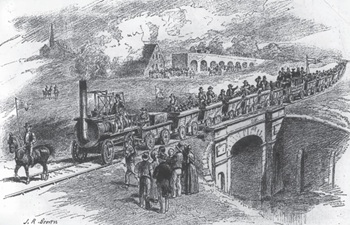
Heritage interests and operational requirements must be balanced.
Historic England publishes research into embodied carbon when retrofitting traditional buildings.

New Prime Minister delivers on ECA call for cut in electricity costs.

CIOB reacts to the announcement of Andy Burnham as Prime Minister.

Heritage and conservation science workforce survey - Have your say.

England's Suburbs 1820-2020. Book review.

New, more proportionate and targeted approach for higher-risk building assessments.

Government brings British Steel into public ownership.

UKCW Birmingham returns with bold new theme and focus.
New guidance published on competence requirements for self-certification schemes.
Construction Management, 8 July

NEETs crisis drives interest in trades, but apprenticeships barriers remain.
Passive fire protection webinar

MEP services penetration seals.